
Oil platforms are offshore installations designed for the drilling, production, and processing of oil and natural gas in marine environments. Their design, construction, and operation involve significant technical, environmental, and logistical challenges, requiring rigorous planning and specialized engineering solutions.
In this context, oil platforms become central elements to the feasibility of offshore production, providing solutions tailored to different field types, environmental conditions, and water depths.
This article presents the main types of oil platforms, highlighting their technical characteristics and their importance to the global energy market.
The importance of oil platforms in the economy
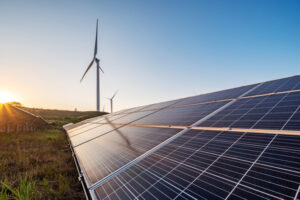
The offshore market is embedded in a broader context of energy transition. Although renewable energy sources continue to expand steadily, oil and natural gas still play a central role in meeting global energy demand.
According to Brazil’s National Agency of Petroleum, Natural Gas and Biofuels (ANP), in 2023 national oil production reached approximately 3.402 million barrels per day, evidencing the relevance of the sector to the Brazilian economy.
The oil and gas industry has a direct impact on supply chains, infrastructure investments, and energy security. To enable the exploitation of vast reserves located in marine environments, oil platforms have been developed—complex structures that operate offshore, often in deep waters and at significant distances from the coastline.
These units contribute to the security of energy supply and production stability, influencing price dynamics and market predictability at the international level. Countries such as Norway, Brazil, Saudi Arabia, and the United States rely heavily on offshore production, making oil platforms strategic assets within their energy matrices.
What are the types of oil platforms?
Fixed oil platforms
Fixed platforms are the most traditional structures used in oil and gas exploration and production in shallow and intermediate waters. They are constructed of steel or concrete and are typically installed in water depths reaching up to approximately 400 meters, depending on site conditions and project requirements.
These platforms are designed for long-term operation, often spanning several decades, with the capability to withstand severe environmental conditions and support continuous oil and gas production, making them particularly suitable for long-life fields.
Main characteristics:
Rigid and stable structure: directly fixed to the seabed, providing high resistance to environmental loads;
High construction costs: economically justified for long-duration fields;
Depth limitation: economically viable only in relatively shallow waters.
Main components:
Jacket: lower structural framework driven or piled into the seabed;
Deck (topside): accommodates drilling, processing, and living facilities;
Foundations: typically steel piles driven into the seabed.
Floating oil platforms
Floating platforms are designed to operate in deep and ultra-deep waters, where fixed solutions become technically or economically unfeasible.
Their main advantage lies in operational flexibility, as many of these units can be towed or relocated according to the field’s life cycle.
Main characteristics:
Maintained in position by mooring systems or dynamic positioning;
Capable of operating under harsh oceanographic conditions;
Widely applied in modern offshore exploration and production projects.
Main components:
Hull or floaters: provide buoyancy;
Topside deck: houses operational and support modules;
Mooring or positioning system: ensures unit stability.
Types of floating platforms
1. Semi-submersible platforms
Semi-submersible platforms rely on large submerged pontoons or columns, significantly reducing wave-induced motions and enhancing stability.
Main characteristics:
Water depth: typically up to 2,000 meters, with greater depths possible depending on design;
High stability: suitable for severe environmental conditions;
Mobility: can be towed between different fields.
2. FPSO – Floating Production, Storage and Offloading
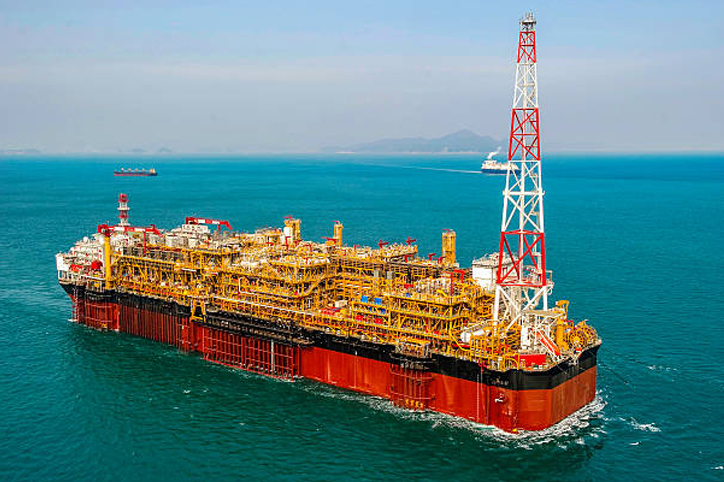
FPSOs are floating units that integrate production, storage, and offloading of oil and gas. They are widely used in remote areas where the installation of subsea pipelines is impractical.
After processing, oil is stored onboard and transferred to shuttle tankers. Brazil stands out globally in this segment, with Petrobras being one of the world’s largest FPSO operators.
Main characteristics:
Operation in ultra-deep waters, often exceeding 3,000 meters;
High operational autonomy;
Flexibility for relocation at the end of the field life.
3. TLWP and TLP – Tension Leg Platforms
Tension Leg Platforms (TLPs) are floating structures anchored to the seabed by vertically tensioned tendons, which significantly restrict vertical motions.
When specifically designed to support wellheads and drilling activities, they are often referred to as Tension Leg Wellhead Platforms (TLWPs).
TLWP: primarily focused on drilling operations and wellhead support;
TLP: a broader configuration capable of operating throughout the entire field life cycle, including production.
Main characteristics:
High vertical stability;
Application in deep waters, often exceeding 1,000 meters;
Operational versatility, allowing multiple wells from a single installation.
4. Spar platforms
Spar platforms consist of a long vertical cylindrical hull submerged in the water column, providing exceptional stability even under adverse ocean conditions.
Main characteristics:
Water depth: capable of operating in depths greater than 3,000 meters;
Excellent dynamic stability;
Suitable for large, long-life fields.
5. Jack-up platforms
Jack-up platforms are self-elevating units primarily used in shallow waters. During transportation they float, but during operation their legs are lowered to the seabed, lifting the hull above the water surface.
Main characteristics:
Typical application in water depths between 5 and 150 meters;
High efficiency for exploratory drilling and early field development;
Ease of mobilization between fields.
Final considerations
Oil platforms provide adaptable solutions for a wide range of environmental, geological, and operational conditions, playing an essential role in the technical and economic feasibility of offshore production.
Understanding the different types of platforms and their characteristics enables industry stakeholders to make more informed strategic decisions, optimizing resources while ensuring efficiency, operational safety, and sustainability throughout the asset life cycle.
CRN’s expertise in the offshore industry
CRN Engenharia’s activities in the offshore industry are directly linked to the practical application of the concepts presented in this article. Over more than a decade, our engineering services have been developed across projects involving various types of offshore platforms, with particular emphasis on semi-submersible units and FPSOs, which represent the majority of solutions currently deployed in the Brazilian offshore sector.
This experience enables CRN to support its clients in critical technical analyses throughout the entire asset life cycle, from early design phases to operations, modifications, and integrity assessments, always with a strong focus on performance, safety, and regulatory compliance.
Now that you understand the importance and operation of oil platforms, contact CRN Engenharia and discover how we can support your projects with specialized engineering, efficiency, and reliability.